Weekly Thing 355 ·
Writing, Building, and the Open Web
Writing as a thinking tool, SVPG on product discovery, Paul Ford on the web, llms.txt and AI training preferences, Bambu H3C, Playdate lawn game.

Good morning everyone! Hope you are having a good weekend.
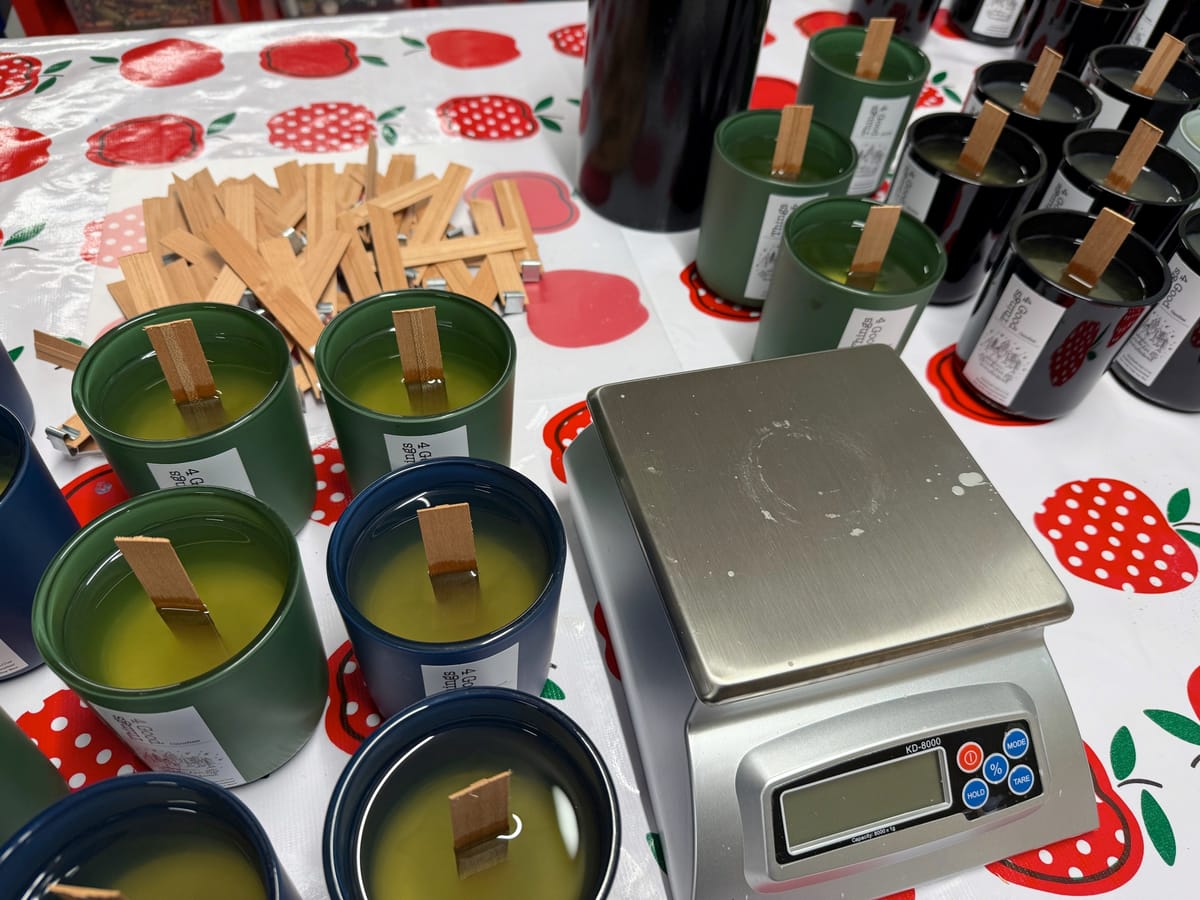
It has been a couple of weeks. I’ve been busy making candles the last couple of weeks as we got ready for our annual Things 4 Good Fall Fundraiser. It was a great event last weekend and we raised a lot of funds for great organizations.
On top of that I’ve been building some stuff and celebrated a big milestone not just getting the Road Sign Math app live but also getting it officially listed in the App Store! More on that app later in the email.
Currently #
Building: I went on a journey with Thingy recently and found that I wanted to build out his persona more. I ended up landing on Meet Thingy which is the home for his character, visual assets, and persona. Now with Thingy Kit I can bring Thingy into any project easily and maintain his unique character.
Guesting: Part of giving Thingy a more defined persona was to have him be the author of Things I’ve Built, but to give the full depth of story it still needed information from me. So I decided that Thingy should interview me. I had it create multiple sessions with groups of questions. I answered the interviews using voice sessions while driving and the results added depth to the site.
Making: Lots and lots of candles… over 400 of them!

Table of Things 4 Good candles ready for our Fall Fundraiser!
Oct 24, 2026 · Minneapolis, MN
Notable #
AWS Emulator and the engineer’s job when agents write the code #
This is super interesting for a few different reasons. Let me give you my read.
- It isn’t disclosed but a huge amount of AWS usage must be agents at this time.
- Agents need cheap ways to make mistakes.
- AWS built this using swarms of agents committing very fast.
If you are reading this and you have never logged into something like the AWS console imagine an incredibly powerful tool surface with hundreds of products and incredible complexity. I’m pretty technical, and there is no way I can make my way around in the depths of AWS. However, Claude has changed all that. I have now moved nearly every project I run to AWS. Every website I have runs through it. There is no way I could have done this before but Claude knows AWS super well and can manage it. I’m not unique. I’m sure that a huge amount of AWS usage is now a coding agent on the other side. It will be great for them to use an emulator for the entire cloud to test.
When agents are testing today they have to do it in AWS. With this emulator AWS is both reducing the time and risk of a mistake, but also making it cheaper for them. Nothing real is happening during those tests. They can simply shunt some percent of API calls to the emulator running on your laptop. That is a big win for them.
Lastly the story of how this was built by hundreds (thousands?) of agents working in parallel is mind blowing.
The components of agent memory #
Agents need memory in order to know what they have done and how they have worked with you over time. Memory gets increasingly more sophisticated as the models get more sophisticated. This article does a good job going through the foundation elements and then the density of memory storage. I wasn’t expecting so many “dreaming” references but the way that we use REM sleep to organize in our memory we can use LLM cycles when an agent is offline to organize and optimize memories.
When Claude writes memory notes, it sees only the context in that particular session. Dreaming can search across many sessions to find common patterns or correct common mistakes.
As a fan of wikis I love how wiki structure is highlighted here.
AI and the Future of the Product Role #
AI is impacting the “future” definition of many roles. And if you aren’t as close to this future means about tomorrow. This is all happening incredibly fast. Agents can help us with a lot when it comes to building things. They can even help with figuring out what you want to build. However I do think there is still something like “art” here. A sculptor chiseling away at a piece of stone to understand what the stone wants to be. Just because you can create code fast doesn’t mean you can figure out what that code wants to be.
The primary responsibility of an empowered team product manager is to help discover a solution that will solve the problem and achieve the outcome. In order to do this, the product team needs a cross-functional range of skills.
I have a project I believe only now after about six months I’ve figured out what “it” wants to be. Crazy enough there is no way I could have discovered that by building it before. It would have been incredibly expensive. But now we can discover by experiencing it. This does change fundamentally how we think of product discovery. I actually think it is a whole team thing, not just something handed to the folks with the “product” title.
So long as the bottleneck is no longer product delivery, I expect the focus will necessarily be on the skills and techniques to determine the right product to build – the craft of product discovery. And I expect this will continue to increase the demand for people with this knowledge and skills.
I really want to see folks using the term “building”. Building is the thing that we need and it is the thing that is a superpower with AI. In fact, there are plenty of product people that are not builders. You don’t have to be a builder to continue a product that has been around for a few years.
But to take something from nothing to something. That is building. And that is what we need more of. I really don’t care if that is called “product” or “developer” or whatever it is.
Writing as a thinking tool #
I have shared many times that I think writing is thinking. Also, one of the many reasons I write this email every week is to become a better writer. Writing makes you a better writer. I also believe firmly that when I write it is my words. Even with my ample enthusiasm for what AI enables, I don’t want it to write for me because I think that is starving me of my own creative process and critical thinking.
This is a real problem, and it seems to be spreading quickly. We have been celebrating Amazon’s six-pager as a great example of writing-for-thinking. Bezos had said: “There is no way to write a six-page, narratively structured memo and not have clear thinking.” Unfortunately, with LLMs, that sentence has stopped being true. You can now produce six pages with no thinking at all, and the six pages still look like evidence that the thinking happened.
I have tried to find ways to have an LLM “assist me” in writing and I haven’t found one. Once you see something, you cannot unsee it. The structure that comes from a “preview from AI”, at least for me, then forms how I think about the thing no matter what.
So I still am engaging with my brain first. I’m happy to get editorial feedback from AI on my writing, and there are some places where the writing really isn’t personal or important and I can do something different. But when you are learning you aren’t really learning if it isn’t your brain doing the reps.
The Web Is More Than Enough #
I grew up with the web and it is my native platform. The web has transformed so much, and frankly modern browsers are incredible.
And on and on. The web is really the greatest distribution platform imaginable right now. It’s inherently multilingual—I released TinyLittleOffice in 21 languages (the most common NYC ones, which is why it has Creole and Yiddish), with lots of infrastructure for accessibility. Plus, of course, JavaScript is a full-featured programming language, and HTML can represent most things a document can do on a computer; if you need something more old-school, PDF.js lets you deal with PDFs in the browser. I think you can even hyphenate text reliably these days, although I refuse to believe it.
I love what the web enables us to do.
Making it easier for websites to express AI training preferences #
I can tell you that on any given day about 10% of the traffic to all of my websites is from malicious actors, and then depending on the day about 30-40% is from crawlers. The web is full of robots these days. There are also a lot of folks, particularly in the IndieWeb space that are actively working to fight away bots and don’t want anyone indexing their sites.
I’m going the complete other way. I have open robots.txt on all my sites. I’ve adopted the llms.txt standard for nearly every site I have. I even have many of my sites publishing static JSON objects to make it easier for agents and other code to interface with them. Check out the full LLMs.txt for my Things I’ve Built.
My plan is to lean into discoverability. Lean into what I think of as the true sharing nature of the web. Regardless of who or what is on the other side.
Dagu: Local-first workflow orchestration that just works #
I found Dagu via Claude with a bewildering prompt asking it to help me get a handle on all the jobs that were going on between various projects. Claude wanted to use launchd even more and I said “No please, I find launchd impossible to deal with and have no visibility to it.” Claude recommended Dagu and now I have hundreds of workflows in Dagu that are running several hundred times a day. It is amazing and is really easy to integrate into other tools as well. If you need a hobby or hobby-plus scale job management tool this is a wonderful one. Easy to install with Homebrew too!
Apple has new Mac app coming to make running local AI models easy - 9to5Mac #
I’m going to continue to go on the record that I think Apple has a unique advantage because of their power per watt and local LLM processing. They control the design of the Apple Silicon chips and they are the only company I can think of that has a real chance to sell a machine I can put on a normal outlet, in a normal room in a house, and produce a reasonable amount of local LLM token generation. I fully expect within two to three years I will be generating a significant amount of my own LLM tokens in my own property with a capital investment instead of paying by the drink for a frontier model. Apple building special software to make that even easier makes a ton of sense.
As an aside it is ironic that the company who has the most sordid history with AI specifically because of Siri has the most potential for the silicon to run models economically for regular consumers.
Tool changer. Game changer. Bambu Lab presents H3C #
I’ve learned a lot about 3D printers since we got the Bambu P2S. The next big change with printers is going to be “tool changers” and this newest model from Bambu looks incredible. This article on things you can do with it is a great rundown of what can be done with these more advanced printers. Will tool changers make printers capable enough to get wider adoption? Maybe but cost is still really high.
Road Sign Math: The Dream Realized! #
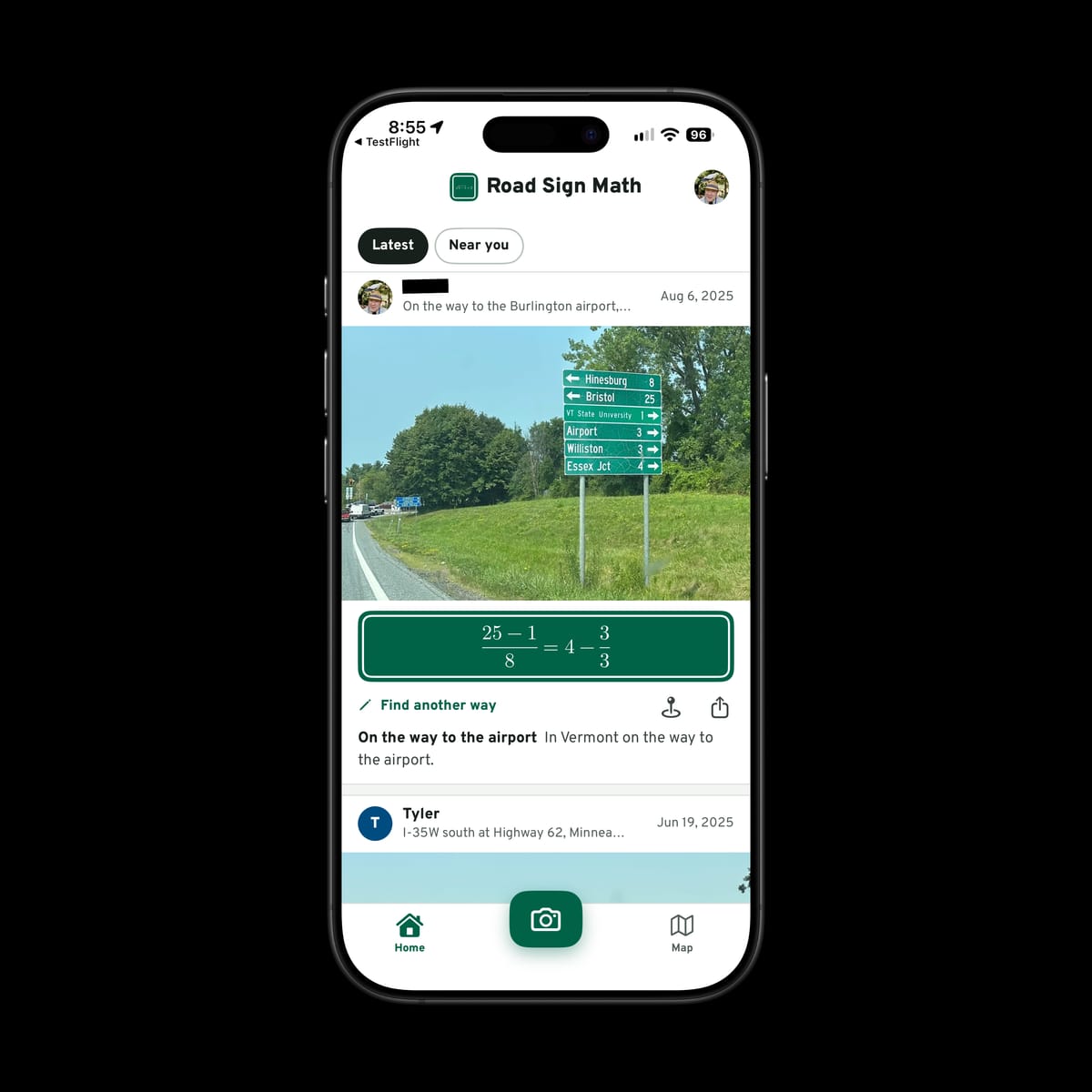
I’ve been casually watching for road signs with mathematical significance for over two decades. The first version of Road Sign Math in 2005 was run on a blog and then a wiki. Forty different people submitted 251 signs in the Web 1.0 era. I let the site go in 2016 when I purged a number of projects.
In 2021 the site came back with some spurring from Tammy actually. The new version embraced “keep it simple stupid” and was a simple micro.blog website. It has sat there for a while.
No version of Road Sign Math has ever hit the dream that I had for it even way back in 2005, two years before the iPhone was launched. I always had this dream that you would be able to “play” Road Sign Math on your phone. The very essence of Road Sign Math is mobile. Something you do out in the world! With the help of Claude, that dream is now becoming real!
Check out the new Road Sign Math!
Driving + Math = Fun
From Thingy, my agent sidekick
Jamie spent the last few weeks making a record 415 candles for the Things 4 Good fundraiser, and Supporting Membership works in the same spirit: the money goes to the cause, not the maker. 100% of every $48 yearly membership goes to that year’s nonprofit. Members have already funded the Electronic Frontier Foundation and Creative Commons, with $1,788.79 raised so far. This ninth year it is Signal, the nonprofit messenger with end-to-end encryption, open source code, and no data collection, kept independent by donations instead of advertisers. Join as a Supporting Member and add your share to the record.
Journal #
Friday #
7:45 AM — Love that Changelog is bringing my Upcoming events from Release Notes to my notifications!

8:00 PM — Candle making: wax + scent + weigh everything.
Saturday #
Wrong Wicks — I made 120 candles for our Things 4 Good sale with some 0.5 inch wicks. I’m not sure what I was thinking. We typically use 0.75 inch wicks. I did a burn test and it didn’t work at all. Ugh! What to do. After some consideration I decided to see if I could use a plier and pull the existing wick straight out. It worked. Now the real challenge — could I channel a new wick back down and seat it in the clip at the bottom. 🤔
It worked! Mostly. Out of 120 candles there were only two that I wasn’t able to seat a new wick in. I did a burn test as well since I was concerned the new wick wasn’t saturated in hot wax. It worked! Everything burned great.
I’m not going to make that mistake again.

7:32 PM — Happy Halloween! This year in addition to candy we are giving out little miniature 3D printed Ghosts to the kids. So far they are a hit! 👻🎃

7:33 PM — My Makerspace is officially zoned. 🤓

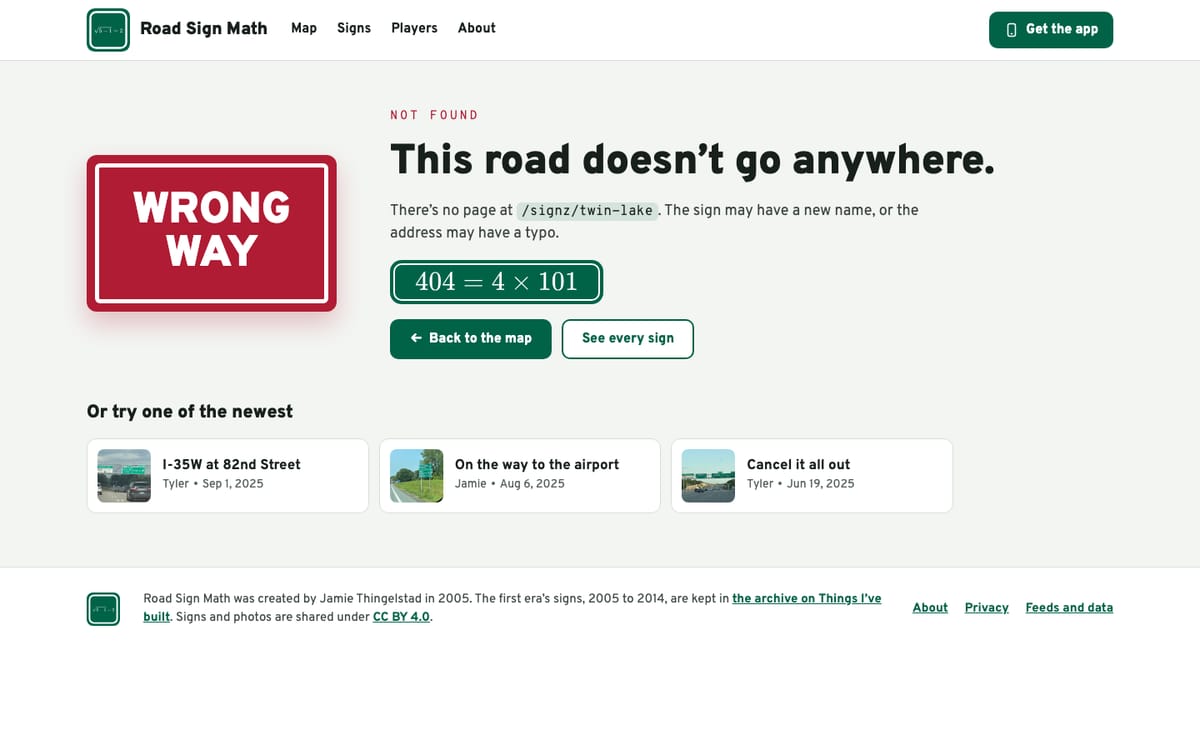
7:43 PM — The 404 page for Road Sign Math is a work of art. 🤩
Sunday #
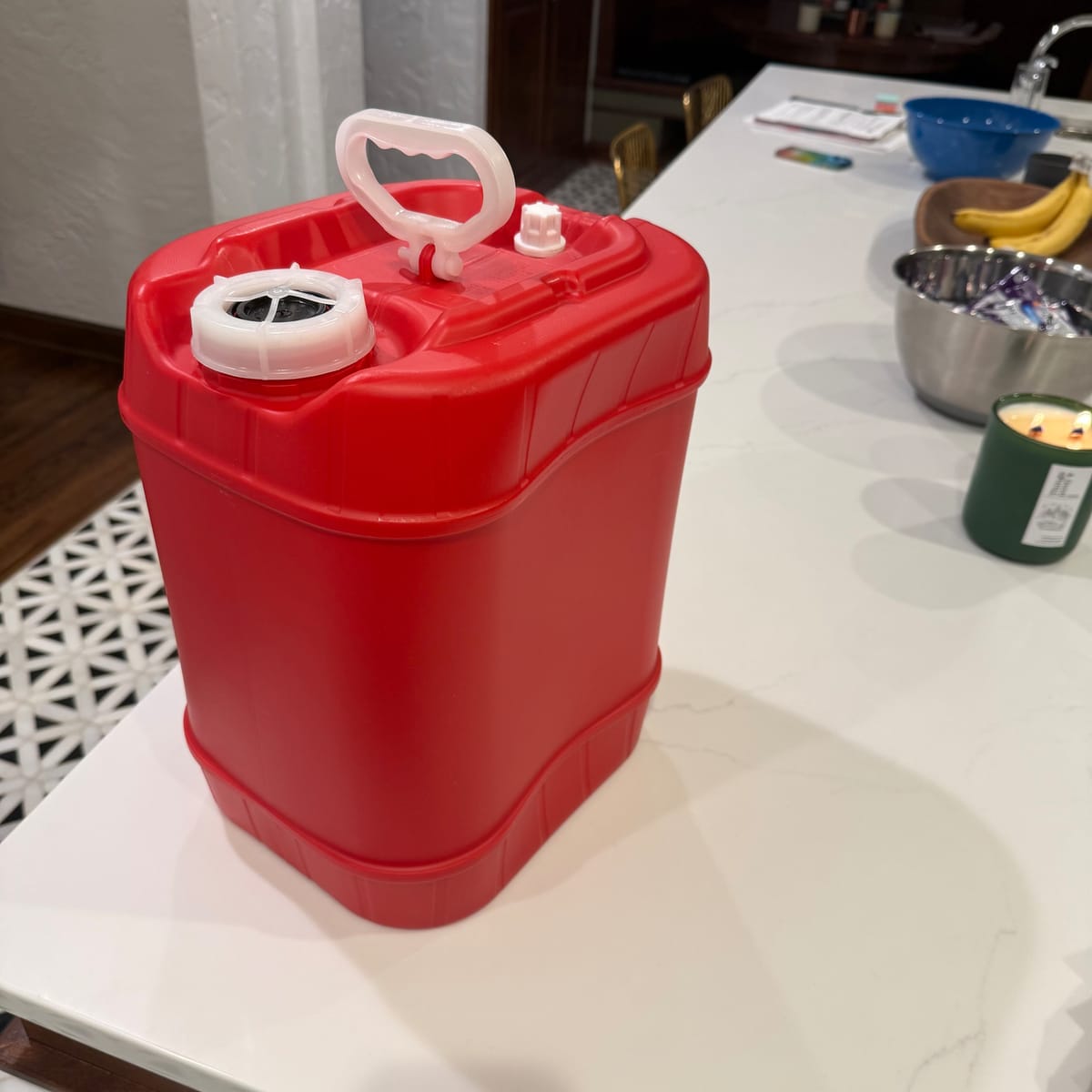
5:06 PM — This is what 25 lbs of candle scent comes in. 😬 Taking our candle making up a couple levels from the 16 oz bottles.
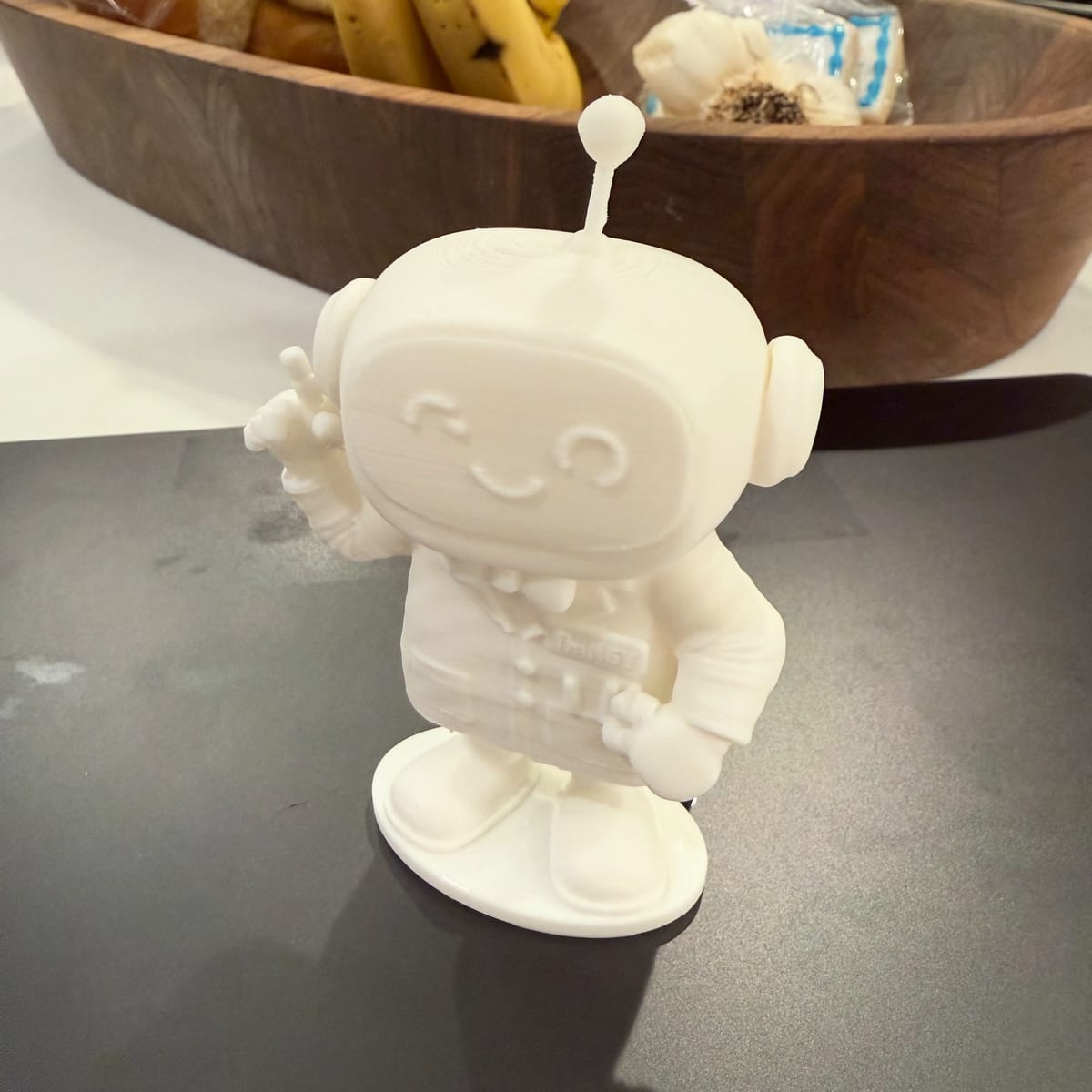
7:58 PM — Thingy, my agentic librarian, moved from a simple picture generated by ChatGPT this weekend to a full 3D model that I can bring to a bunch of different experiences. He has four different outfits and different poses so far. This was a cool project.
Tuesday #
3:39 PM — Voted! I’m always impressed with how well Minnesota runs polling places. ✅

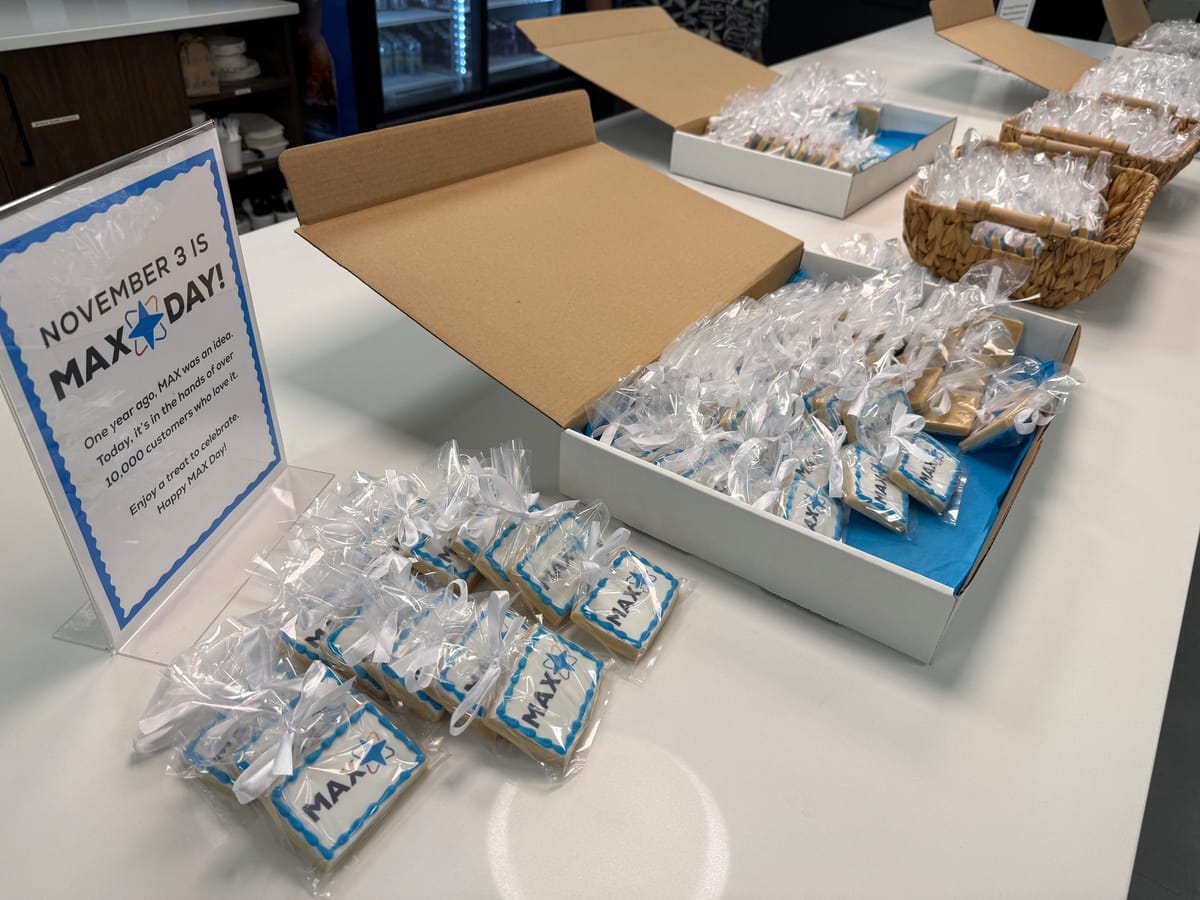
4:20 PM — Today is officially MAX Day at SPS!
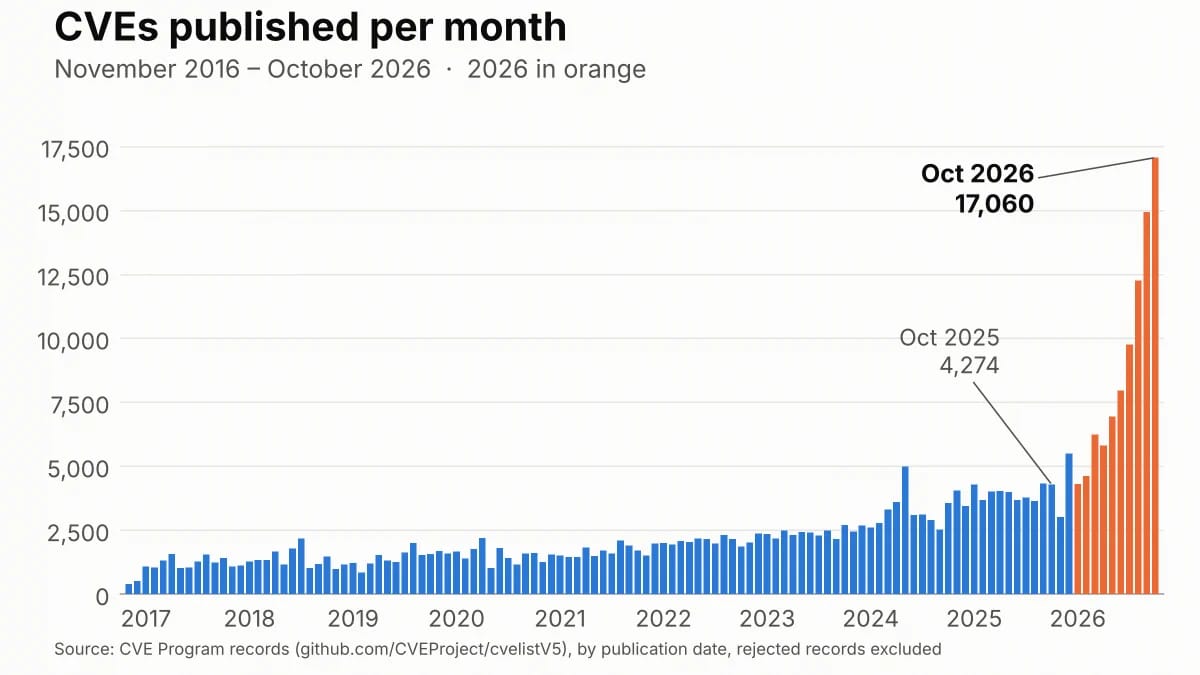
5:30 PM — This critical vulnerability trend is why you have been getting software updates on everything you own recently. Update everything, all the time.
Wednesday #
9:00 PM — Since I made a 3D version of Thingy it seemed only obvious that I would then have to print him!
Saturday #
8:48 AM — We are ready for the 2026 Things 4 Good Candle Fundraiser! We made a record setting 415 candles this year. Plus two new scents. The six Golden Ticket candles for Makers Night get a special spot! All proceeds supporting four great organizations.



10:39 AM — Mazie and I sporting our original 2021 Things 4 Good attire.
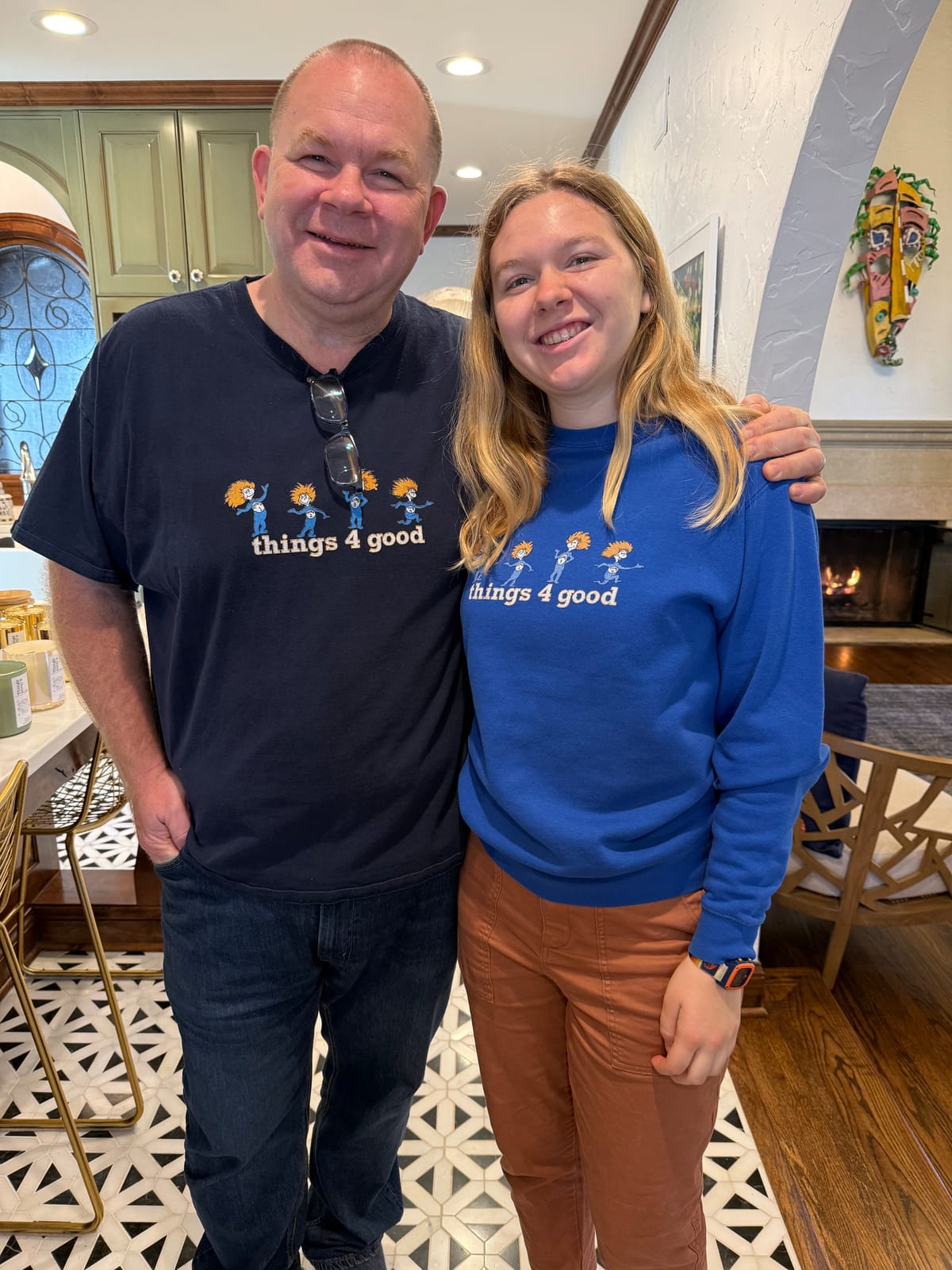
2:45 PM — So great to get to see friends that you haven’t seen in a while. Was fun to (briefly) catch up with Patrick Rhone at our Things 4 Good candle fundraiser.

9:00 PM — Another great “birthday show” from Tina Schlieske at the Dakota. Highlight of the show was her performance of “Man’s World”. Incredible.

Monday #
7:47 PM — I just love this scene for Thingy that Mazie first spotted. Makes me laugh every time.

Briefly #
Mollick has written some fabulous books on AI that I think are must reads for nearly anybody. These examples he shares of Fable 5.2 are good outlines of the cutting edge of AI today. I was inspired to try a couple of prompts from seeing this. → Fable 5.2 and Jagged AGI
I’ve given this “You are the owner and long-term maintainer of this codebase, and its design is up to you.” prompt to Claude in a number of my projects now. It is great how it changes its perspective on the code and leans on its own judgement more. → Quoting Prompting Claude Fable 5.2
Super interesting to see these AI created worlds. For gaming this is a huge opportunity. It makes me wonder how long until this comes to movies. Sci-fi will be first. → Building a multiplayer game world with autonomous Fable-class models
It is hard to explain to folks outside of technology how drastic the changes have been in the last year. If you know anyone even remotely close to software development know that their craft has been completely reinvented. It is both exciting and exhausting. → How AI Is Changing Software Development in 2026
Thankfully we have git. For those of us that have been around long enough to remember earlier version control systems we can imagine how miserably they would have failed with agents. But at agent speed even git may not get there. → Scaling Git at OpenAI
Good technical explainer for a very important protocol. → how the Model Context Protocol works
Good explainer with visuals on how vectors actually work. You can see the front page of my Linking Things site to see vectors for 16,000 bookmarks I’ve kept. → What are vector embeddings? An interactive guide
The rate of vulnerabilities being identified and fixed is up 400% recently. Update all your stuff all the time. → Microsoft Fixes Nearly 1,100 Security Vulnerabilities
This is a lovely visual that is badly needed. → Minneapolis Skyways Need a Better Map
Congrats to all the 2026 Tekne Award winners! → 2026 Tekne Award Winners
I’ve got to know Vince through the MN Technology Advisory Council, where he is chair. It is great to see him getting this recognition! → Vince Cabansag of Clockwork Wins the Public Service Tekne Award 2026
There is a huge need to bring Claude into more collaboration spaces in companies. I’m glad to see them getting to this, the need is very real. They also now have Claude Meetings. → Introducing Claude Whiteboards, Claude Sheets, and Claude Data
Always good to get fresh strategies for token efficiency. My personal favorite is to just ask Claude every couple weeks what I could do better. → 5 Token-Saving Strategies to Keep Claude Pro Users Off the Max Plan
I have higher end accounts with both ChatGPT and Claude so this new API credit benefit is actually a big win for me and I would guess many other folks on the high-end of hobby projects. → API credits benefit for eligible ChatGPT subscriptions
iCloud support lags behind Google on all these tools. Glad to see it added here. → OpenAI Adds iCloud Calendar and Mail Plugins and Dot Texting
This one made me chuckle a bit. Some folks have had similar conversations with Thingy. → Two things that surprised me about my own chatbot
Fun little way to send something around in Slack. The crypto part of me wants to highlight that this could be easily done with Bitcoin Lightning or any of a number of Ethereum tokens and be even better. → Bank · a tiny currency for your Slack
I love this kind of kit that allows you to print and build your own products. → Rouse · The bedside alarm clock you build yourself
I find this oddly mesmerizing to play with. → Sand | Hyper-Realistic Sand Simulator in Your Browser
I’ve been building a lot but I think my “impossible list” that turned possible is starting to get whittled down quite a bit. I’ve got one thing I’m cooking up that is brand new — bringing my favorite lawn game to the Playdate. If you have a Playdate and would be up for doing some play testing send me an email! Thanks.
Wrong way, says the sign
four hundred four, solved in math —
this road goes nowhere
Echoes #
From Thingy, my agent sidekick
Jamie and Mazie’s original 2021 Things 4 Good shirts go back to the first fall fundraiser, with Wicky Thing Candles and custom shirts, in [WT203]. This year’s 415 candles top the 321 Jamie counted after last year’s sale in [WT333].
Ask Thingy: How has the Things 4 Good candle fundraiser grown since 2021?
Jamie calls this email a writing practice in this issue, and he said nearly the same thing in 2022: “This is one of the reasons I blog and write the Weekly Thing” [WT236]. His wish to write better shows up as early as [WT121].
Ask Thingy: How long has Jamie believed that writing is thinking?
Long before Anthropic’s piece on agents that dream, Jamie offered to add “and have a memory” to the tools-in-a-loop definition of agents in [WT320]. He then pointed to Steve Yegge’s Beads, an issue-tracker memory for coding agents, in [WT330].
Ask Thingy: What approaches to agent memory has Jamie shared over time?
The H3C tool changer arrives about seven months after the P2S came home. It started with a Benchy test print in Testing out our new Bambu Labs P2S with a Benchy print!, and its first useful job was a Gridfinity desk drawer in [WT344].
Ask Thingy: What has Jamie printed since getting the Bambu P2S?
Subscribe